
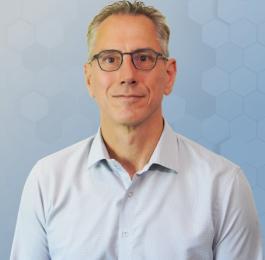
Neil Bierbaum
Speaker
Neil Bierbaum
Executive Coach · Master Certified Coach (MCC)
Neil Bierbaum is a Master Certified Coach (MCC) — the highest credential awarded by the International Coaching Federation — and one of South Africa’s leading voices on leadership, emotional intelligence, and human performance under pressure. He serves on the faculty of Stellenbosch Business School, where he lectures on ontological coaching methodology, and works with clients across Africa, the Middle East, Europe and Canada from his base in Johannesburg. He brings a rare combination of hard-won business experience and deep psychological training to every stage he steps onto.
His path was anything but conventional. Neil began as an award-winning journalist and magazine editor before becoming an early digital pioneer — co-founding a venture-funded booking-and-payments startup and directing an internet-services company that ran large-scale booking systems. When the startup did not secure a further funding round, he calls it “my most valuable education”: a lesson in resilience that still shapes his work today. That entrepreneurial grounding runs alongside four decades of investigation into human development — spanning Vipassana meditation, psychotherapy, and Jungian depth psychology — and formal coach training completed more than twenty years ago. He holds an MPhil in Leadership Coaching (cum laude) from Stellenbosch Business School, where he received the Top Student and Research awards, along with a BCom in Economics.
Neil describes himself not as a guru but as “an investigator who reports what he found” — an approach that resonates with the technically minded, analytically rigorous leaders he specialises in, many of them sceptical of conventional self-help. At the centre of his work is the Information Asymmetry model: his framework for why leadership effectiveness depends on accessing the hidden knowledge held in other people’s minds — the information that ultimately determines whether decisions succeed or fail. On that basis, he argues that emotional intelligence is not a soft skill but a strategic capability, and one that matters more than ever in an AI-driven world.
His corporate client list spans financial services (Absa, FNB, Investec, Nedbank), pharmaceuticals (AstraZeneca, Novartis, Roche), and mining and energy (De Beers, Exxaro, Chevron). He is the author of several books, including Practical Mindfulness with Dr Colinda Linde, and hosts a YouTube channel and a Substack newsletter. Neil rejects corporate theatre and generic self-help in favour of frameworks grounded in academic rigour, direct business experience, and evidence — delivered with the candour of a journalist and the precision of a scientist.
Keynote
Deal With What’s Real and What Matters: How to Perform and Stay Human in an AI-Driven World
As artificial intelligence reshapes how we work, decide and lead, the leaders who thrive won’t be the ones who out-compute the machines — they’ll be the ones who out-human them. Drawing on four decades of studying human development, more than twenty years of coaching senior leaders and teams, and his own hard-earned entrepreneurial lessons, Neil answers a question every leader is quietly asking: how do I stay grounded, present and genuinely effective when the pressure — and the pace of change — keeps accelerating?
Cutting through both AI hype and generic wellness advice, he offers something more useful: a practical framework for performing under real pressure without losing what makes you human. Through his Information Asymmetry model, he shows why emotional intelligence isn’t a soft skill to tolerate but a strategic capability to master — one of the few genuine human advantages left.
Audiences leave with concrete tools for staying clear-headed under uncertainty, reading what is actually happening beneath the surface of a room or a decision, and leading with a presence no algorithm can replicate. Direct, evidence-based and free of slogans, this is a talk for the analytically minded leader who wants substance — and a clear-eyed way to deal with what’s real, and what matters, as AI changes everything else.